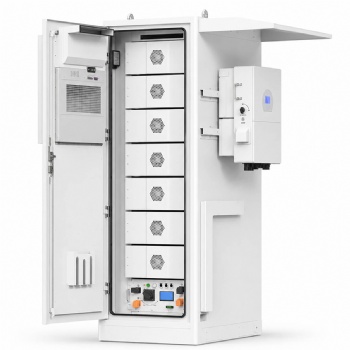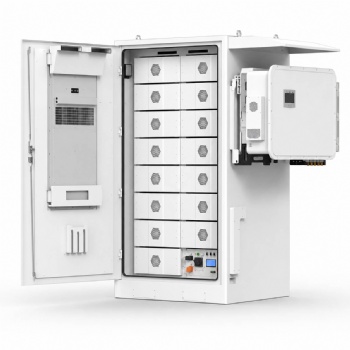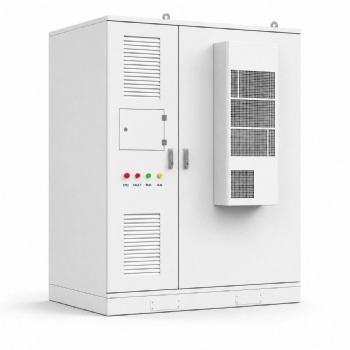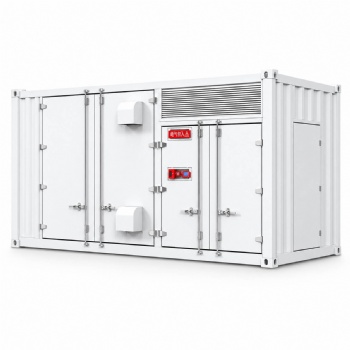
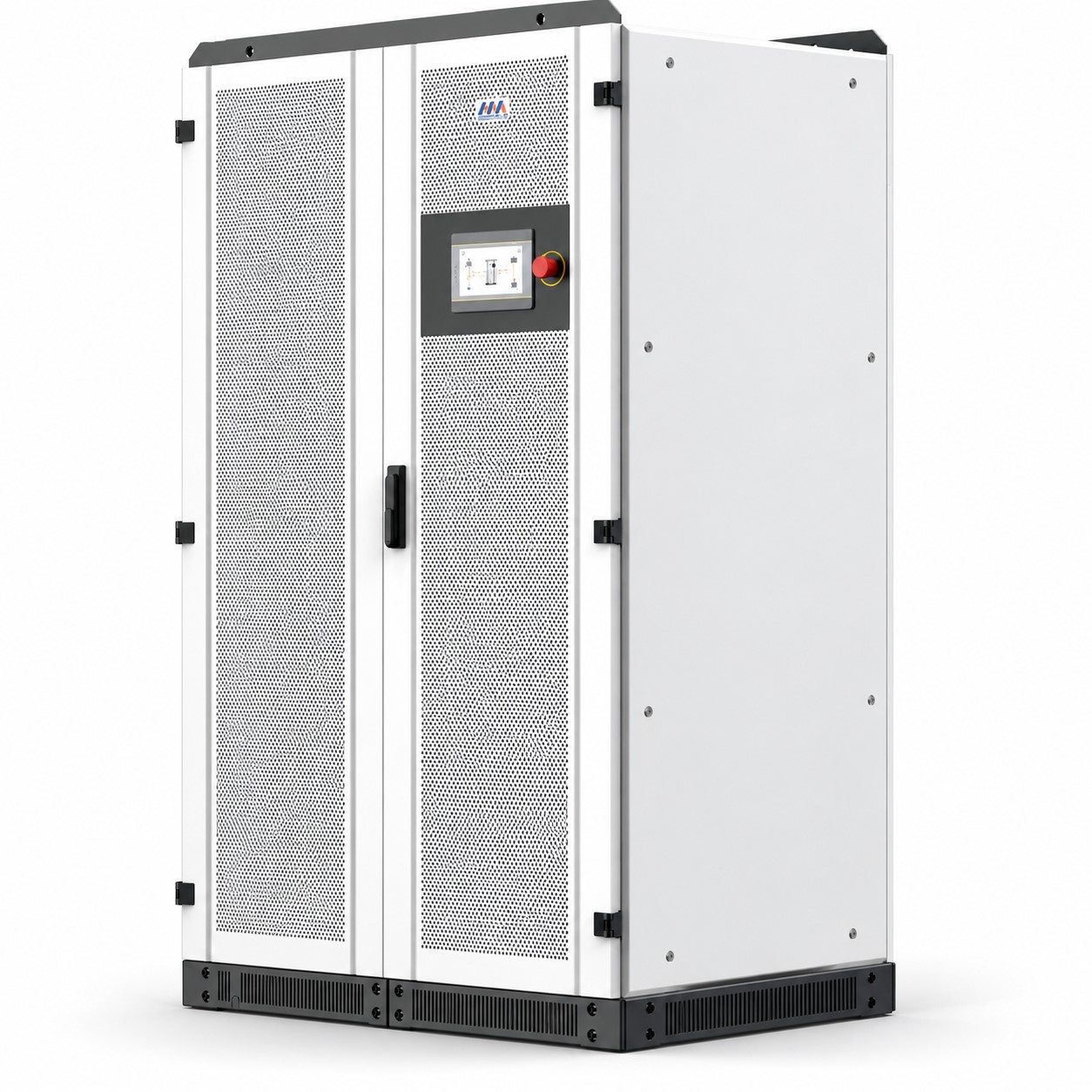
The 30–500kW Microgrid Hybrid Inverter is designed for off-grid, weak-grid and hybrid microgrid applications requiring coordinated operation of solar PV, battery energy storage, diesel generators and AC loads.
Available in rated power levels from 30kW to 500kW, the MPS series combines power conversion, PV/MPPT integration, battery charging and discharging, grid/off-grid operation and generator coordination in one scalable platform.
The system supports multiple-machine parallel operation, 100% unbalanced loads, flexible PV configuration and diesel-generator load-rate control, making it particularly suitable for mines, islands, remote farms, villages and other locations where reliable power supply and fuel efficiency are important.
30 / 50 / 100 / 150 / 250 / 500kW rated power options
Designed for microgrid and off-grid applications
Supports Solar PV + Battery + Diesel Generator + Load
On-grid and off-grid operating capability
Integrated PV / MPPT module / transformer / STS / maintenance bypass
Supports 100% unbalanced loads
Supports multiple units in parallel
Flexible system expansion
Flexible PV configuration
Diesel generator load-rate control for improved fuel economy
Configurable control strategies
Battery voltage up to 850V
PV input voltage up to 1000V
RS485 / CAN BMS communication
RS485 / TCP/IP EMS communication
LCD touch-screen
Air-cooled system
Suitable for harsh and remote operating environments
| Model | Rated Power | Max. Output Power |
|---|---|---|
| MPS0030 | 30kW | 33kW |
| MPS0050 | 50kW | 55kW |
| MPS0100 | 100kW | 110kW |
| MPS0150 | 150kW | 165kW |
| MPS0250 | 250kW | 275kW |
| MPS0500 | 500kW | 550kW |
| Parameter | MPS0030 | MPS0050 | MPS0100 | MPS0150 | MPS0250 | MPS0500 |
|---|---|---|---|---|---|---|
| Max. Output Power | 33kW | 55kW | 110kW | 165kW | 275kW | 550kW |
| Rated Output Power | 30kW | 50kW | 100kW | 150kW | 250kW | 500kW |
| Rated Voltage | 400V | 400V | 400V | 400V | 400V | 400V |
| Voltage Range | 320–460V | 320–460V | 320–460V | 320–460V | 320–460V | 320–460V |
| Rated Current | 43A | 72A | 144A | 216A | 361A | 722A |
| Rated Frequency | 50/60Hz | 50/60Hz | 50/60Hz | 50/60Hz | 50/60Hz | 50/60Hz |
| Frequency Range | 45–55 / 55–65Hz | Same | Same | Same | Same | Same |
| THDi | <3% | <3% | <3% | <3% | <3% | <3% |
| Power Factor | 1 leading to 1 lagging, settable | Same | Same | Same | Same | Same |
| Grid Type | 3W + N + PE | Same | Same | Same | Same | Same |
The MPS series can operate independently from the utility grid and establish a stable local AC microgrid.
| Parameter | MPS0030 | MPS0050 | MPS0100 | MPS0150 | MPS0250 | MPS0500 |
|---|---|---|---|---|---|---|
| Max. Output Power | 33kW | 55kW | 110kW | 165kW | 275kW | 550kW |
| Rated Output Power | 30kW | 50kW | 100kW | 150kW | 250kW | 500kW |
| Rated Voltage | 400V | 400V | 400V | 400V | 400V | 400V |
| Rated Current | 43A | 72A | 144A | 216A | 361A | 722A |
| Rated Frequency | 50/60Hz | 50/60Hz | 50/60Hz | 50/60Hz | 50/60Hz | 50/60Hz |
| THDu | ≤1% Linear Load / ≤5% Non-linear Load | Same | Same | Same | Same | Same |
| Overload Capacity | 110% Long-Term / 120% for 1 min | Same | Same | Same | Same | Same |
This makes the inverter suitable for applications where the microgrid itself must maintain voltage and frequency without a stable utility grid.
PV input can be configured according to project requirements and inverter capacity.
| Parameter | MPS0030 | MPS0050 | MPS0100 | MPS0150 | MPS0250 | MPS0500 |
|---|---|---|---|---|---|---|
| Max. PV Input Voltage | 1000V | 1000V | 1000V | 1000V | 1000V | 1000V |
| Max. PV Power Options | 36 / 72kW | 60 / 120kW | 120 / 180 / 240kW | 120 / 180 / 240kW | 300 / 360kW | 600 / 660 / 720kW |
| MPPT Module Quantity | 1 / 2 | 1 / 2 | 2 / 3 / 4 | 2 / 3 / 4 | 5 / 6 | 10 / 11 / 12 |
| MPPT Voltage Range | 250–850V | 250–850V | 250–850V | 250–850V | 250–850V | 250–850V |
The modular MPPT design allows different PV capacities to be configured around the same base inverter power.
For example:
100kW MPS inverter
can be configured with approximately:
120kW / 180kW / 240kW PV input
depending on project requirements.
This is useful for remote microgrids where solar-array size may be designed according to local irradiation, daily energy demand and required generator operating hours.
| Parameter | MPS0030 | MPS0050 | MPS0100 | MPS0150 | MPS0250 | MPS0500 |
|---|---|---|---|---|---|---|
| Battery Voltage Range | 250–850V | 320–850V | 420–850V | 420–850V | 420–850V | 500–850V |
| Max. Charging Power | 36 / 72kW | 60 / 120kW | 120 / 180 / 240kW | 120 / 180 / 240kW | 300 / 360kW | 600 / 660 / 720kW |
The wide battery voltage range allows the MPS series to work with different high-voltage battery energy-storage configurations.
Battery-system selection should be matched according to:
Required backup time
Daily energy consumption
Peak load
PV generation
Diesel-generator capacity
Battery charge/discharge rate
Required autonomy
One of the most important functions of the MPS series is diesel-generator coordination.
The controller can support DG load-rate control, helping the generator operate in a more efficient load range instead of frequently running at very low loads.
A typical configuration is:
Solar PV + Battery ESS + MPS Hybrid Inverter + Diesel Generator → Load
During strong solar production
Solar PV → Load
Excess Solar → Battery
When solar power decreases
Solar + Battery → Load
When battery SOC becomes low
Diesel Generator → Load + Battery Charging
When load demand increases sharply
Battery + Diesel Generator → Load
When renewable energy becomes sufficient again
Generator can be reduced or stopped according to the system control strategy.
For remote and off-grid projects, running a diesel generator alone can result in:
High fuel consumption
Long generator operating hours
Low-load operation
Higher maintenance frequency
Higher operating costs
Adding battery storage and solar PV allows the microgrid controller to coordinate different power sources.
The objective is not necessarily to eliminate the generator, but to use it only when it is needed and at a more efficient operating point.
This is particularly relevant to Linkworld Power because it connects your two major product lines:
Battery Energy Storage + Diesel Generator
into one complete hybrid power solution.
A typical system can include:
Solar PV
↓
MPPT / PV Module
↓
MPS Microgrid Hybrid Inverter
↔ Battery Energy Storage System
↔ Diesel Generator
↓
AC Loads
Depending on the project, grid connection can also be incorporated.
The supplier describes the MPS system as integrating:
PV / MPPT Module
Transformer
STS
Maintenance Bypass
Hybrid Power Conversion
Battery Interface
Generator Coordination
Microgrid Control
This means the product is better positioned as a microgrid hybrid power platform rather than simply as an inverter.
The series supports parallel connection of multiple machines, allowing larger microgrid systems to be built when required.
This provides flexibility for:
Future load growth
Larger battery capacity
Larger PV installations
Redundant system design
Multi-unit microgrid projects
| Parameter | Specification |
|---|---|
| Operating Temperature | -30°C to +55°C |
| Relative Humidity | 0–95%, non-condensing |
| Ingress Protection | IP20 |
| Noise | <70dB |
| Max. Operating Altitude | <5000m |
| Derating Altitude | Above 3000m |
| Cooling | Air Cooling |
| Display | LCD Touch Screen |
| BMS Communication | RS485 / CAN |
| EMS Communication | RS485 / TCP/IP |
| Model | Dimensions (W × D × H) | Weight |
|---|---|---|
| MPS0030 | 800 × 800 × 1900mm | Approx. 620–650kg |
| MPS0050 | 800 × 800 × 1900mm | Approx. 720–750kg |
| MPS0100 | 1200 × 800 × 2050mm | Approx. 1120–1180kg |
| MPS0150 | 1200 × 800 × 2050mm | Approx. 1250–1310kg |
| MPS0250 | Multi-cabinet configuration | Approx. 1980–2010kg |
| MPS0500 | Multi-cabinet configuration | Approx. 3265–3325kg |
LCD Touch Screen
RS485
CAN
RS485
TCP/IP
These interfaces allow the microgrid inverter to communicate with the battery BMS and external energy-management system.
Suitable for mining sites where utility power is unavailable or unreliable.
Solar and battery storage can reduce diesel-generator operating hours while maintaining stable power for mining loads.
Suitable for island microgrids traditionally dependent on diesel generation.
PV and battery storage can reduce fuel consumption and improve renewable-energy utilization.
Provides flexible power for farms, irrigation systems and remote agricultural facilities.
Can be used as the core power-conversion platform for rural electrification and independent community microgrids.
These series can also be positioned for projects such as:
Remote Industrial Facilities
Telecom Sites
Construction Camps
Remote Resorts
Oil & Gas Sites
Rural Microgrids
Emergency Power Systems
For example, a remote mining site may require:
100kW Peak Load
150–200kWp Solar PV
300–500kWh Battery Storage
150kVA Diesel Generator
100kW MPS Microgrid Hybrid Inverter
The actual configuration should not be selected only according to peak load.
Before system sizing, we should collect:
Peak load
Average load
24-hour load profile
Daily energy consumption
Critical loads
PV installation capacity
Solar irradiation
Required backup time
Existing generator capacity
Generator operating hours
Fuel cost
Ambient temperature
Installation altitude
Grid availability
Then determine:
PV Size + Battery kWh + PCS/Inverter kW + Generator kVA + Control Strategy
Combines PV, battery, AC power conversion and microgrid-control functions.
DG load-rate control helps coordinate generator operation with renewable energy and storage.
Modular MPPT options support different PV capacities.
Power ratings from 30kW to 500kW, with support for multi-unit parallel systems.
Suitable for both independent microgrids and projects with an available utility grid.
Control strategies can be configured according to specific project operating requirements.